The dry season
December to March: the hot, dry months by the municipality's count. Mid-February brings the three-day Old Town Festival (12 to 14 February in 2026) and Chinese New Year, with lion dances on Soi Romanee and Thalang Road.
Town · Talat Yai
Nine streets of restored shophouses and mansions in Phuket Town, with Chinese shrines, small museums, cafés, a dawn market and the Sunday Walking Street.
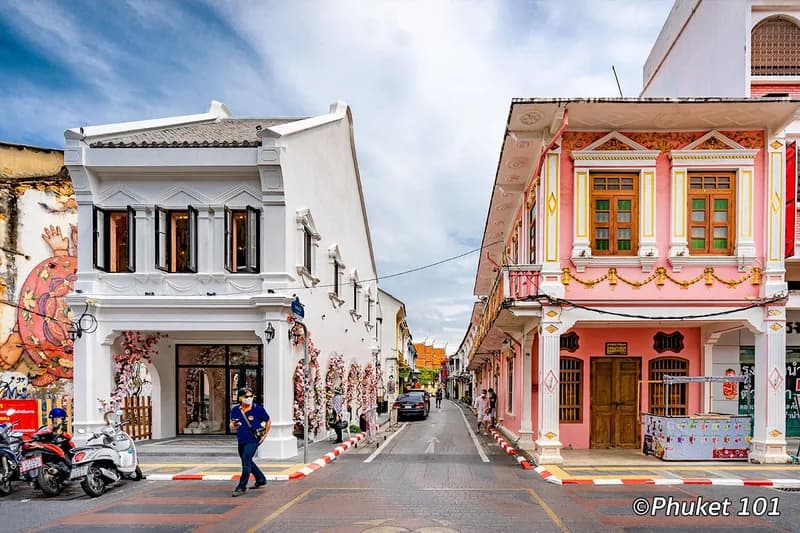
Phuket Old Town is the historic heart of Phuket Town, the provincial capital. A guide counts nine streets: Thalang, Phang Nga, Dibuk, Yaowarat, Krabi, Ratsada, Phuket and Ranong roads and the narrow lane of Soi Romanee, lined with Sino-Portuguese shophouses and mansions. The quarter straddles Talat Yai and Talat Nuea, the two subdistricts of Phuket City, and runs from Ranong Road's fresh market to the clock tower at Phang Nga and Phuket roads.
The town grew with the tin mines, which drew Chinese families to the island. Sam San shrine on Krabi Road dates from 1853, the Shrine of the Serene Light from 1891, and Jui Tui moved to Ranong Road after a fire in 1907; in 1910 more than 180 Hainanese bought a house on Thalang Road as a refuge for newcomers. The Thai Hua Museum tells the immigrants' story, and Baan Chinpracha is a mansion its family still lives in.
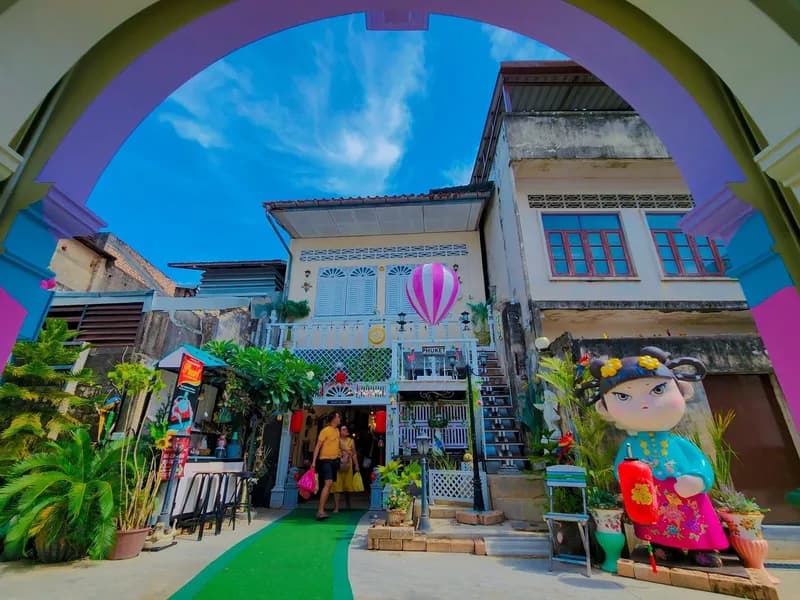
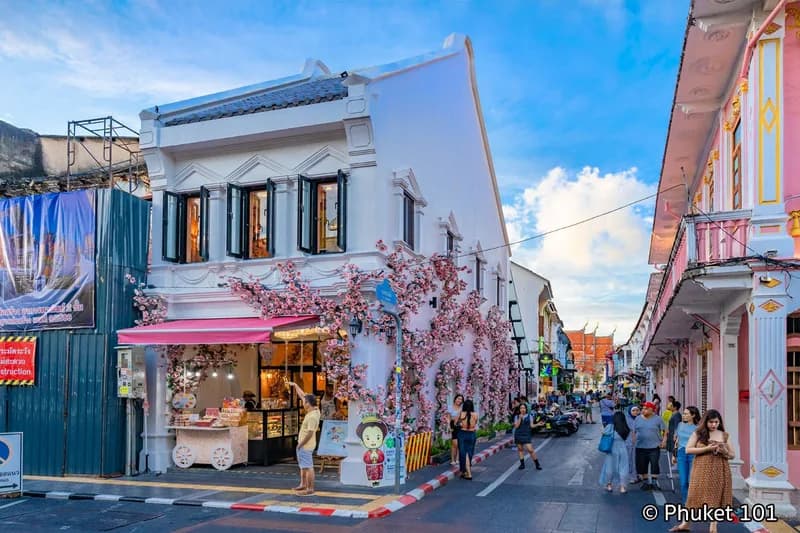
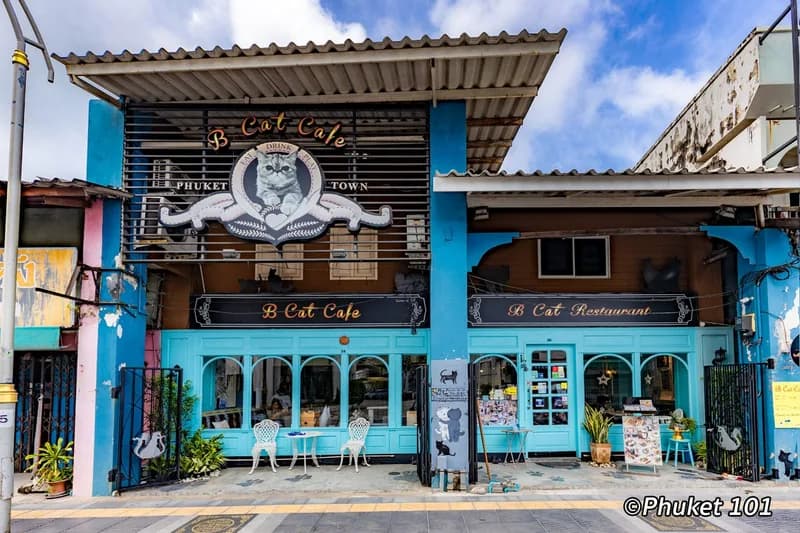
Today the shophouses hold cafés, guesthouses, galleries and small shops, and murals by Thai artists hide down the lanes. Thalang Road closes to traffic every Sunday afternoon for the walking-street market; the Old Town Festival in February and the Vegetarian Festival in October fill the streets. Phuket joined UNESCO's Creative Cities Network for gastronomy in 2015.
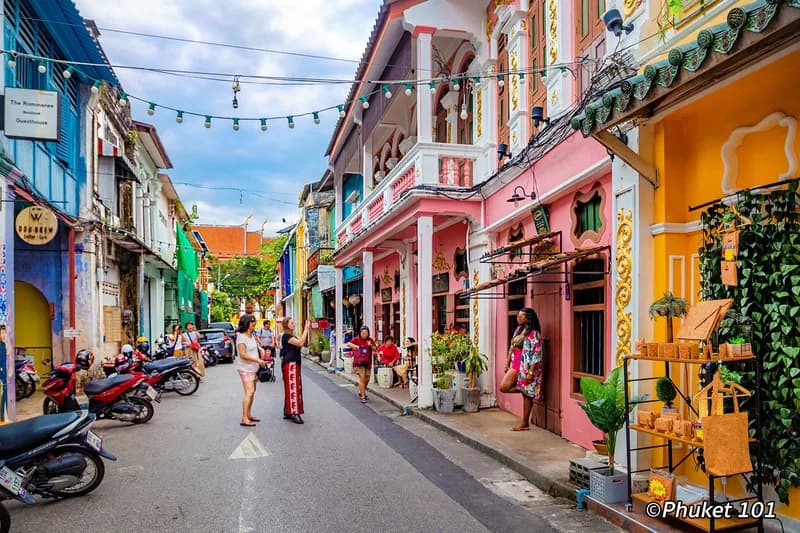
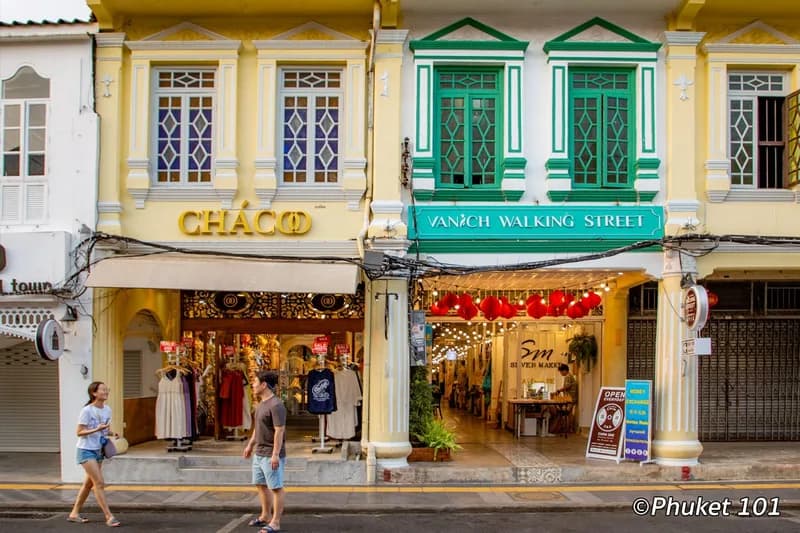
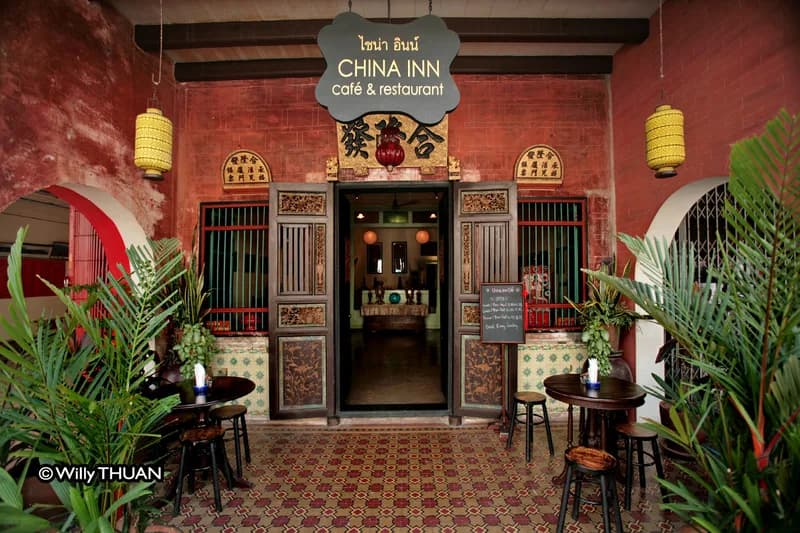
Restored Sino-Portuguese shophouses along Thalang Road, the main street, and Soi Romanee, the most photographed lane; half a day is enough for a first walk.
Ranong Road's fresh market before dawn, the Indy market at Limelight from Wednesday to Friday, the Sunday Walking Street, and the Oasis passage between Thalang and Dibuk roads daily.
Blue buses leave Ranong Market about every 30 minutes, 06:00 to 18:00: 30 THB to Patong or Kata and Karon, 35 THB to Rawai and Nai Harn, 40 to 50 THB to Kamala, Surin and Bang Tao (2026).
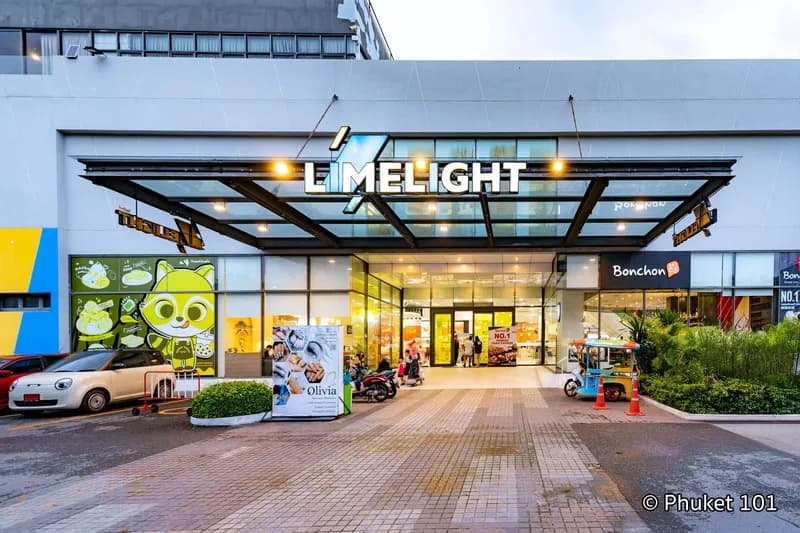
Leave the car at Limelight on Dibuk Road or a municipal car park; the Dragon Line bus loops the Old Town from Limelight every 15 to 30 minutes for 20 THB.
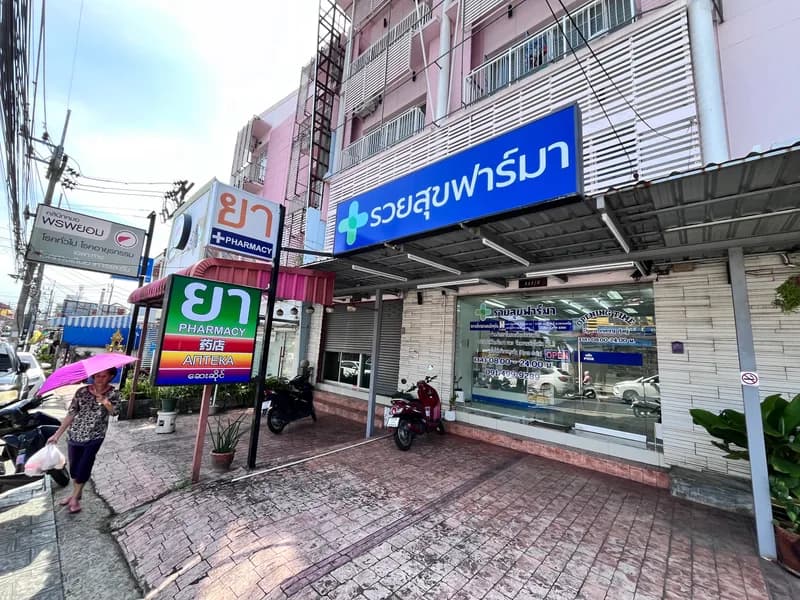
Limelight has a Tops supermarket and a food court, and Google Maps lists Ruaysuk Pharma on Phatiphat Road as open around the clock.
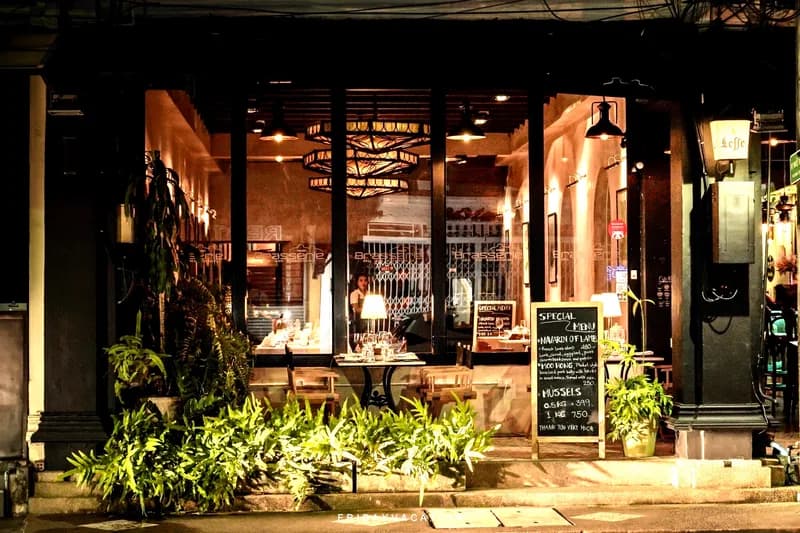
The evenings are small-scale: bars such as The Library and a hidden one called Shhh, rather than clubs.
Culture
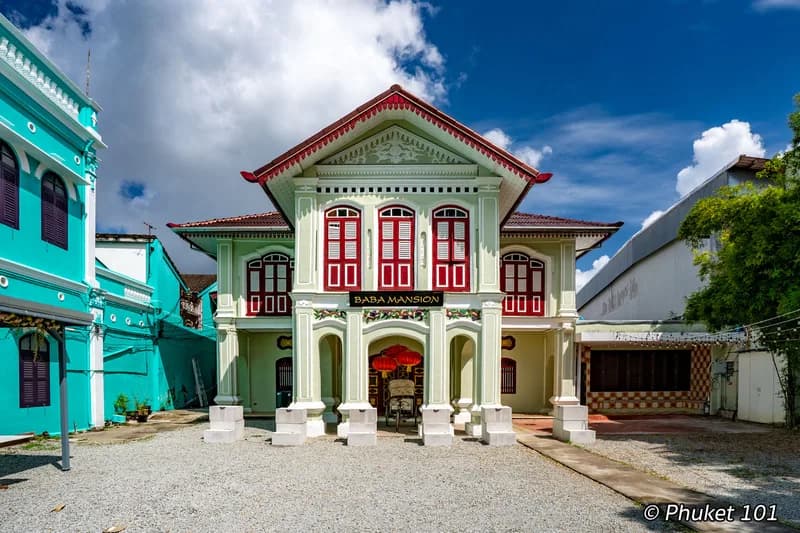
Pastel shophouses and mansions with cafés, shrines, museums and street art; Thalang Road, Soi Romanee and Phang Nga Road are the usual places to start.
Culture
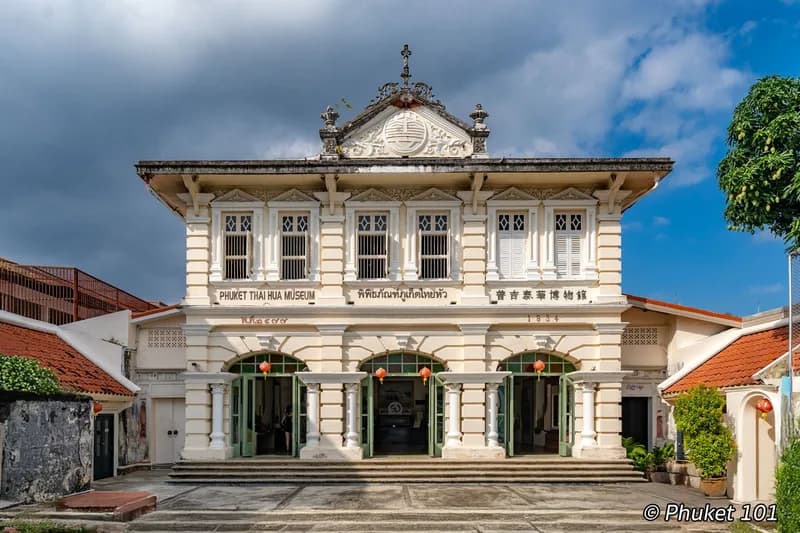
How Chinese immigrants and tin mining built modern Phuket, in photos, films and original papers on Krabi Road; 09:00 to 17:00, closed on Mondays, 200 THB.
Culture
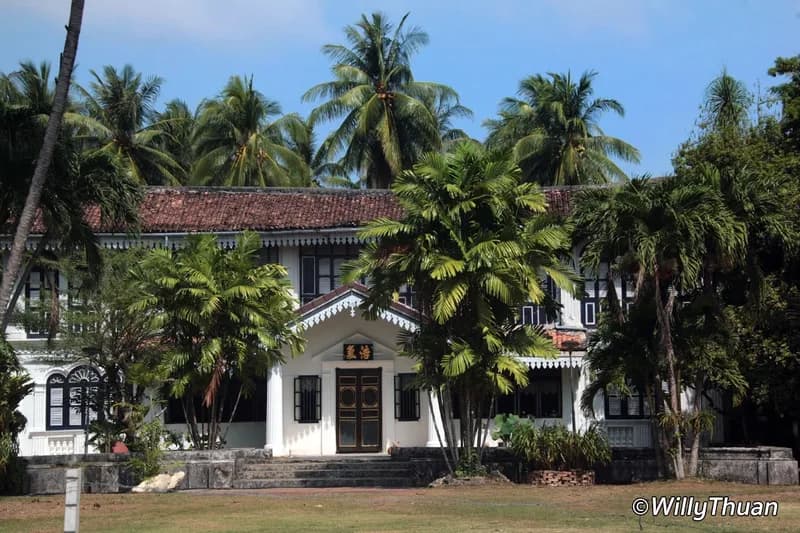
A Sino-Portuguese mansion on Krabi Road that its family still lives in and opens to visitors, 09:00 to 16:30, for 150 THB.
Culture
A small, free museum of Baba heritage at Phang Nga and Phuket roads, opposite the old police station's clock tower; Monday to Saturday, 10:00 to 20:00.
Culture
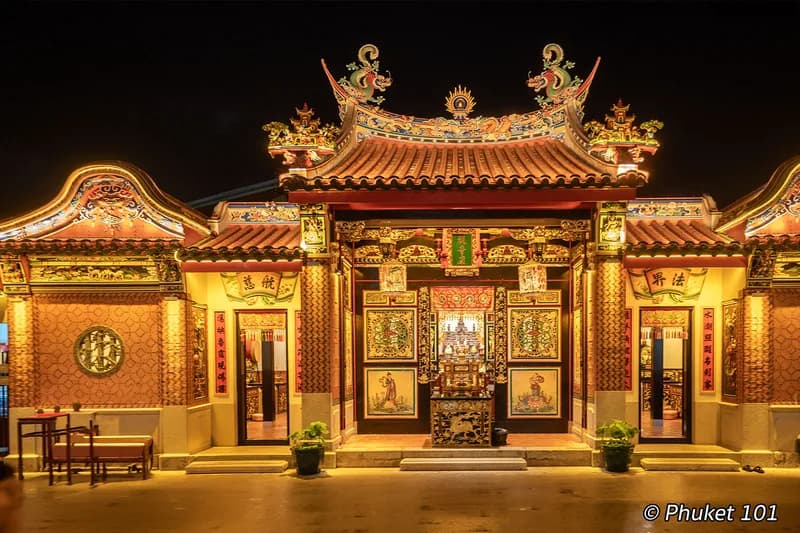
A family shrine of 1891 in a courtyard behind Phang Nga Road, with old wall paintings and a ceramic roof; free, 08:30 to 17:30.
Culture
On Thalang Road: bought in 1910 by Hainanese immigrants as a refuge for newcomers, now a shrine with Hainanese antiques and the Goddess of the Sea.
Culture
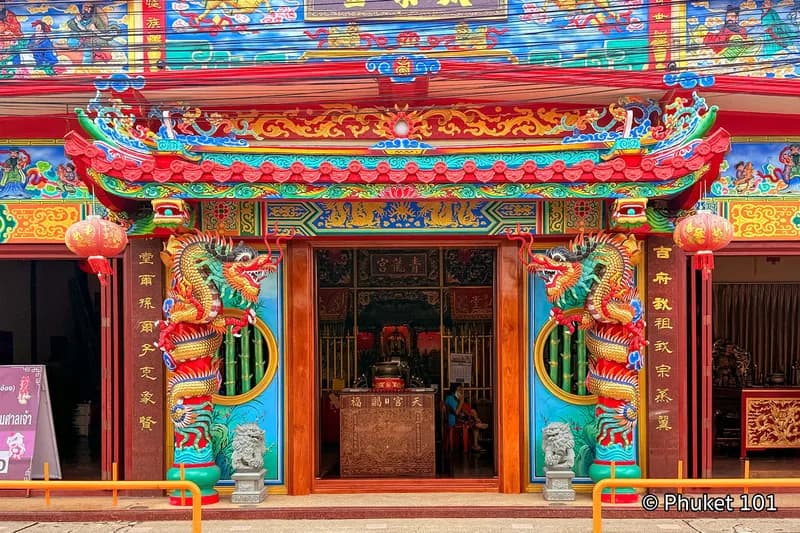
The busy shrine on Ranong Road, rebuilt here after the fire of 1907; free, and the heart of the Vegetarian Festival's processions and opera in October.
Culture
A small shrine of 1853 on Krabi Road, founded by Chinese families who came for the mines: red pillars, painted walls and candlelit statues.
Culture
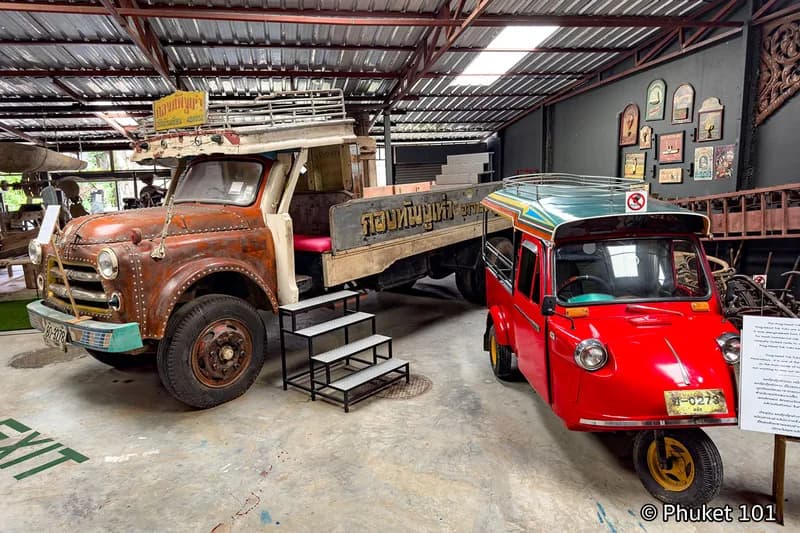
Objects from the mining era and everyday island life inside the Thavorn Hotel of 1960 on Ratsada Road; 09:00 to 16:00, 120 THB.
Shopping
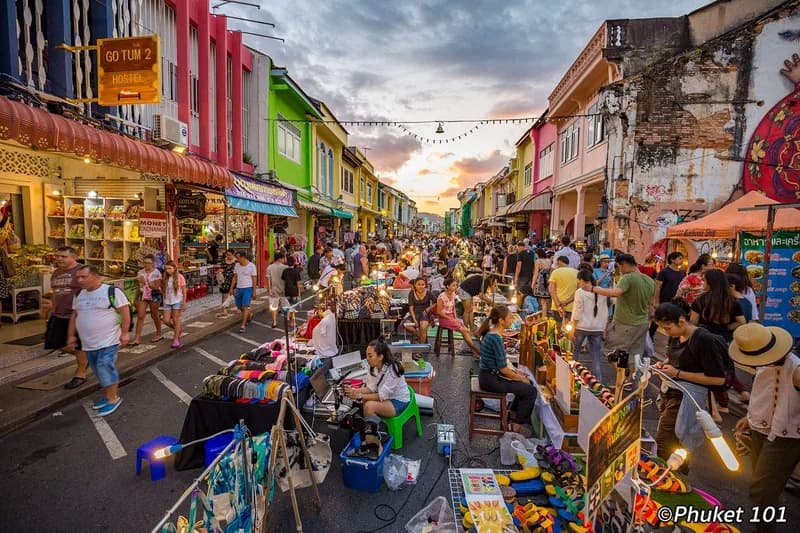
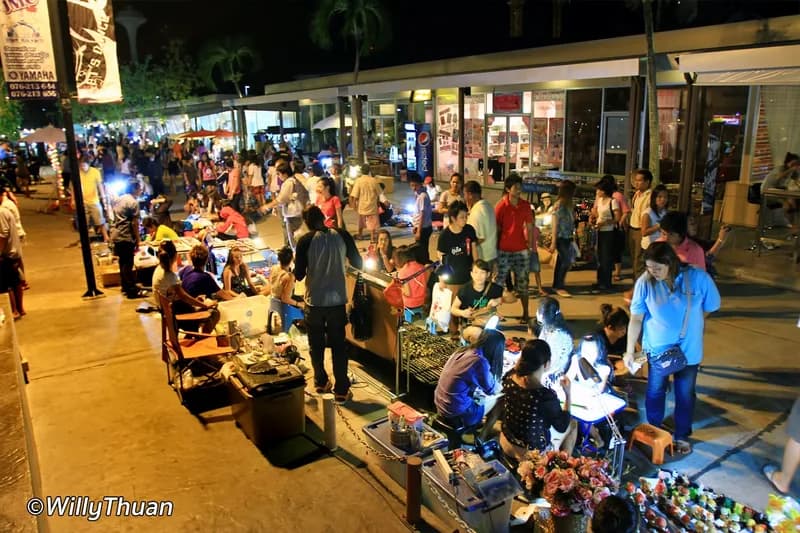
Every Sunday from 16:00 to about 21:00, Thalang Road from Thepkasattri Road to Phuket Road closes to traffic for some 360 m of food stalls, Phuket sweets and handmade goods.
Food and drink
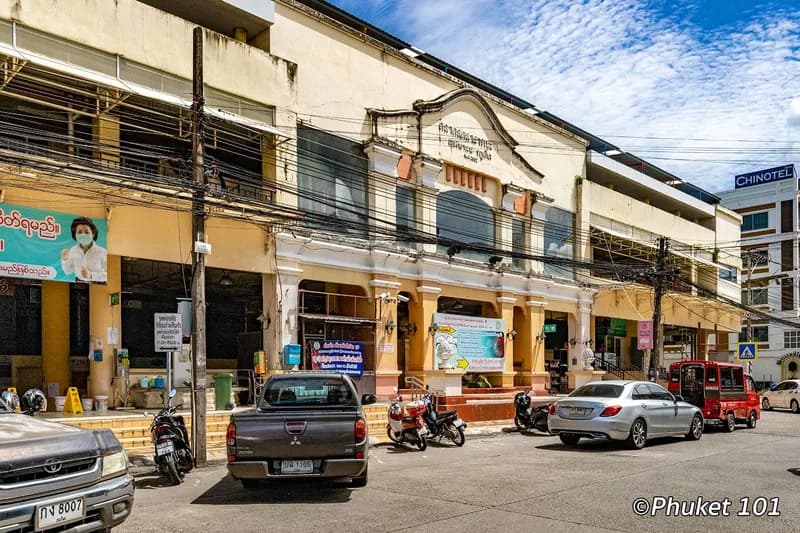
The town's oldest and largest fresh market, busiest from about 03:00 to 07:00, when farmers bring produce: fruit, seafood, meat, dried goods and ready-made food.
Shopping
Young Thais sell their own designs among food stalls and a live band on Limelight Avenue, off Dibuk Road; Wednesday to Friday, 16:00 to 22:00.
Shopping
A covered, air-conditioned passage of about 150 m from Thalang Road to Dibuk Road, with souvenirs, batik, silk, hats and local food; daily 10:00 to 20:00.
Shopping
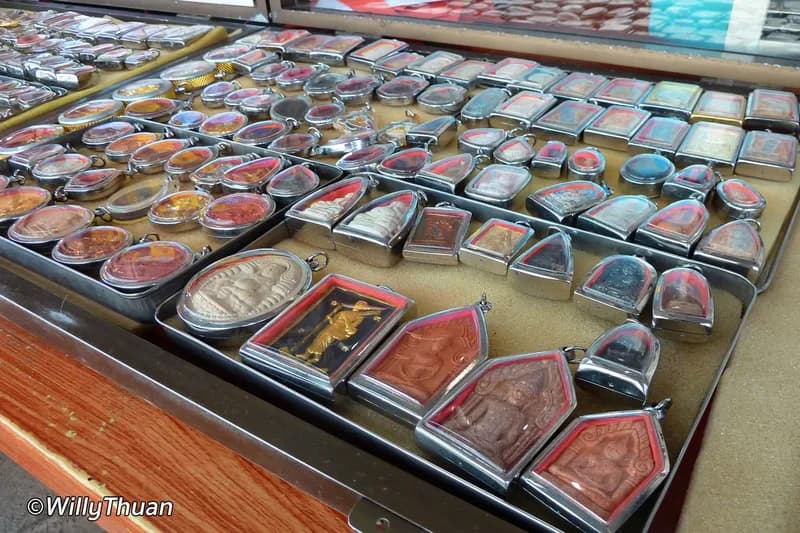
An alley of long tables between Ratsada and Phang Nga roads where buyers study Thai amulets through magnifying glasses; daily 08:00 to 19:00.
The fresh market at its busiest, before the town wakes up. Ranong Road Market
The immigrants' story on Krabi Road, then Baan Chinpracha a few doors along. Phuket Thai Hua Museum
The food court upstairs, out of the midday heat, with the car park downstairs. Limelight Phuket
The Shrine of the Serene Light behind Phang Nga Road, then the amulet alley off Ratsada Road. Shrine of the Serene Light
On Sunday, Thalang Road's walking street; from Wednesday to Friday, the Indy market at Limelight. Lard Yai Sunday Walking Street
One of the small bars in the old streets, or a walk under the lit façades.
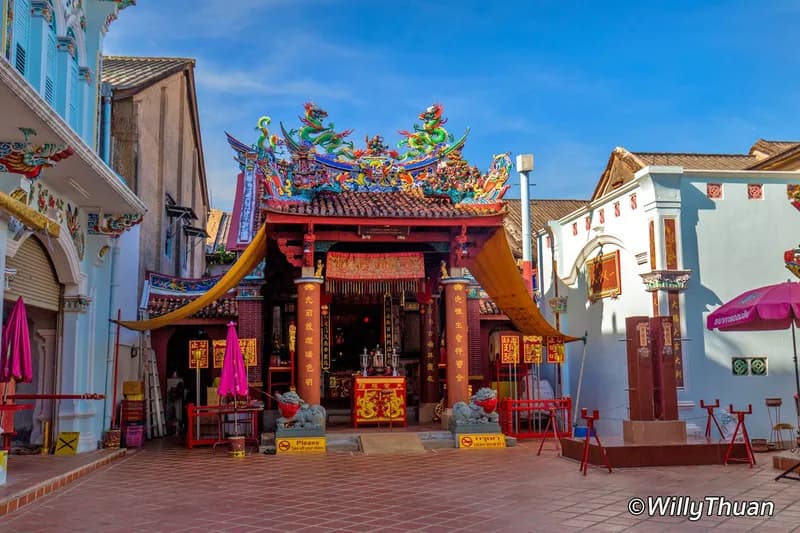
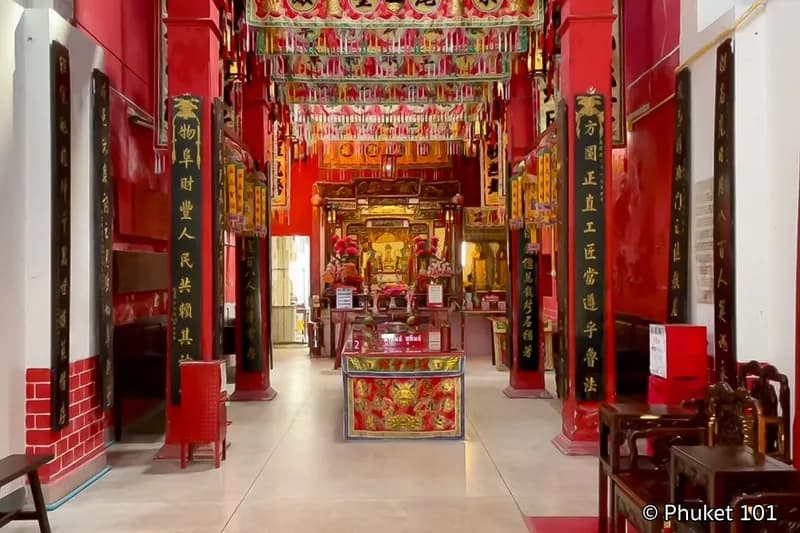
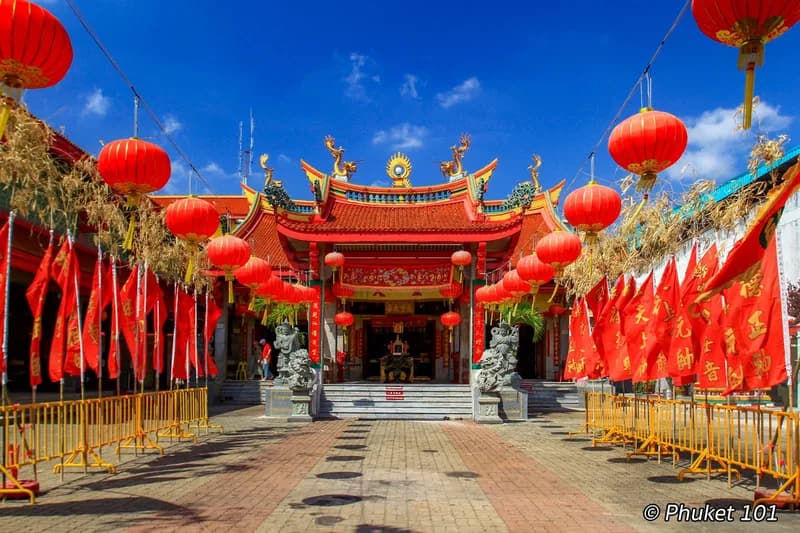
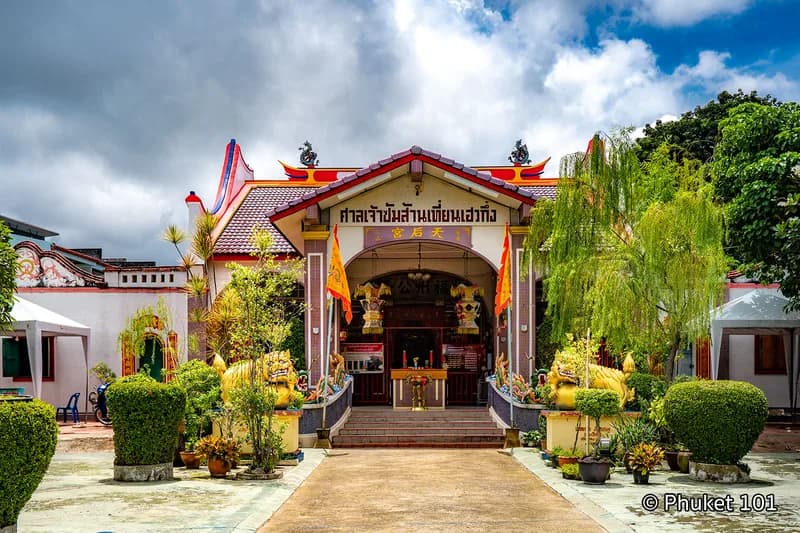



Chinese shrine
Chinese shrine
Chinese shrine
Chinese shrine
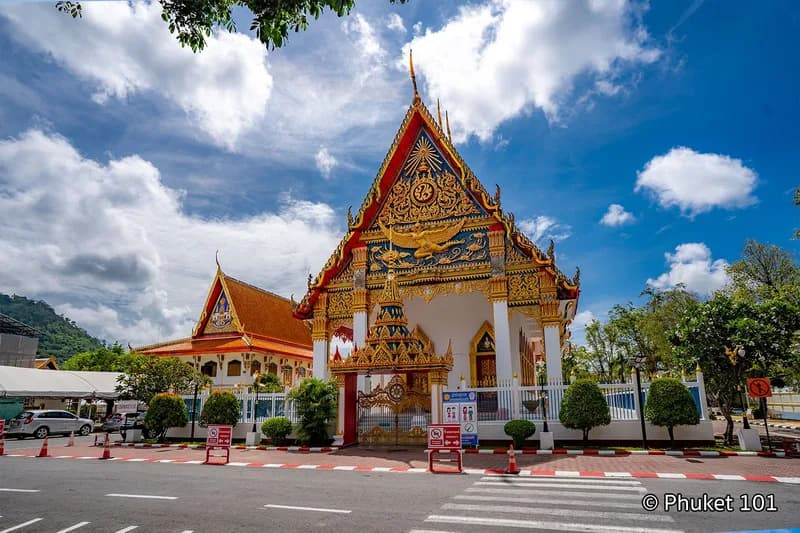
Buddhist temple
Buddhist temple
Chinese shrine
Chinese shrine
Landmark
Landmark
Museum
Museum
Museum
Local eatery
Restaurant
Fine dining
Restaurant
Restaurant
Restaurant
Restaurant
Restaurant
Restaurant
Local eatery
Local eatery
Restaurant
Restaurant
Restaurant
Restaurant
Restaurant
Restaurant
Local eatery
Local eatery
Restaurant
Restaurant
Restaurant
Restaurant
Local eatery
Restaurant
Local eatery
Local eatery
Restaurant
Restaurant
Restaurant
Restaurant
Restaurant
Restaurant
Restaurant
Restaurant
Local eatery
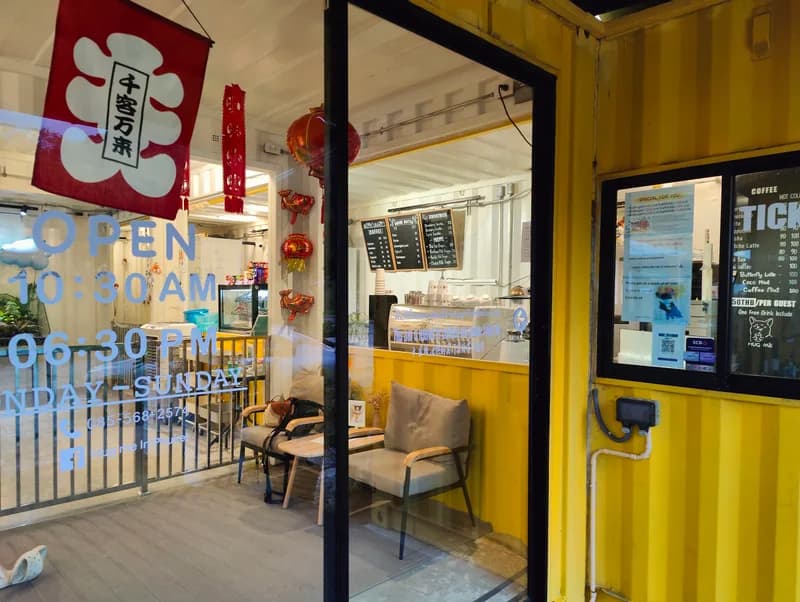
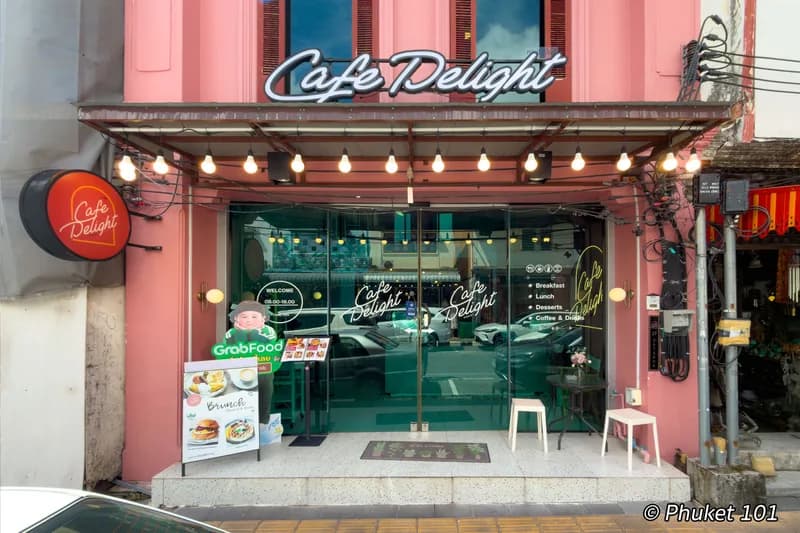
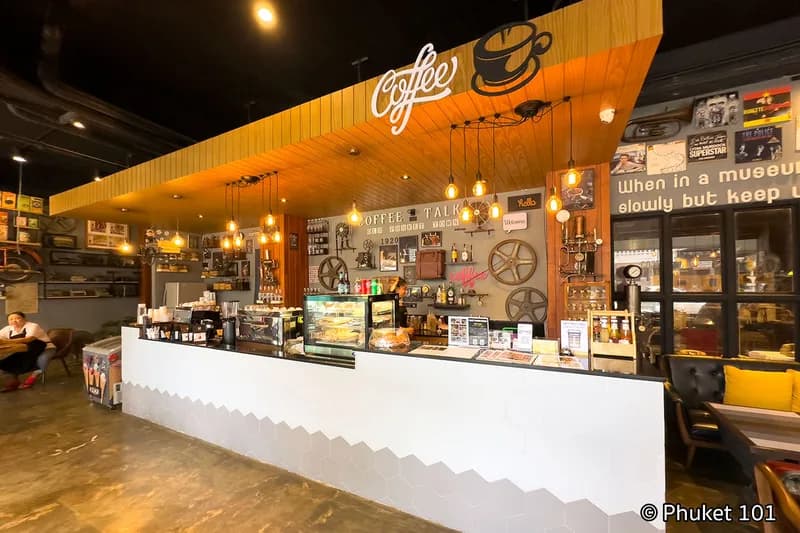
Café
Café
Café
Café
Café
Café
Café
Café
Café
Café
Café
Bakery
Café
Bakery
Café
Shopping mall
Walking street
Fresh market
Night market
Walking street
Specialty market
Night market
Pharmacy
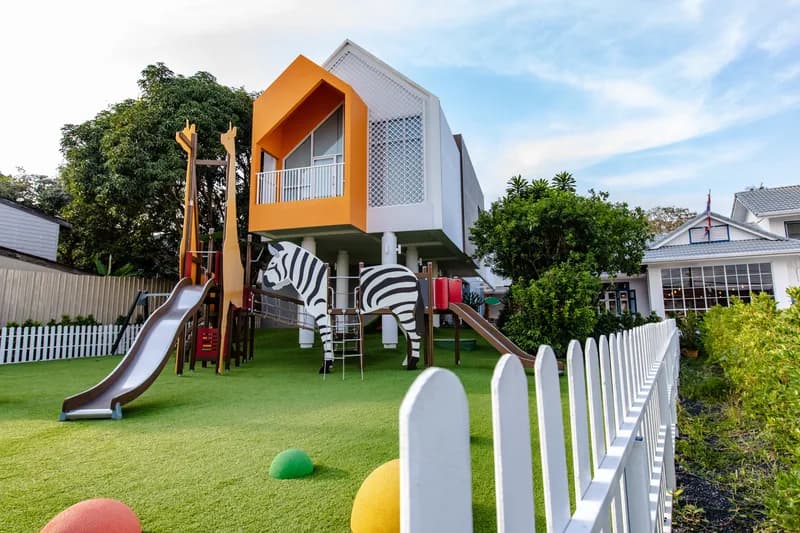
Kids' club
Dance studio
Dance studio
Shophouses, many of them guesthouses, cafés or boutique hotels below and homes above, with older condos and apartments at the edges. Rents in Phuket Town are among the lowest on the island: about 12,000 THB a month for a studio and up to 25,000 THB for a one-bedroom (2026).
December to March: the hot, dry months by the municipality's count. Mid-February brings the three-day Old Town Festival (12 to 14 February in 2026) and Chinese New Year, with lion dances on Soi Romanee and Thalang Road.
April to November: rain, often in short heavy showers. For nine days in October the Vegetarian Festival fills Jui Tui and the other shrines with processions, opera and firecrackers (10 to 18 October in 2026).
A good half-day with children who like markets and colour rather than beaches: short walks between shrines and museums, the Dragon Line bus for tired legs, and Limelight for food, toilets and air conditioning. During the Vegetarian Festival the firecrackers are loud and close.
The Old Town is the centre of Phuket Town, about 30 km from the airport and 14 km from Patong. Blue buses to the beaches leave Ranong Market on its edge, the airport bus ends at Bus Terminal 1 nearby, and the Dragon Line loops its streets.
Parking. The streets are narrow and often one-way: park at Limelight or a municipal car park and walk.
Thalang Road closes to traffic from 16:00 to about 21:00; come early for the food and to move freely.
It charged 20 THB a ride in early 2026; it runs 11:00 to 22:00 from Limelight, every 15 to 30 minutes.
The mall has its own car park, a supermarket and a food court: a good base for a walk.
The Thai Hua Museum is closed on Mondays and charges 200 THB more for photos inside; Museum Phuket is closed on Sundays.
Ranong Road's market is at its best from about 03:00 to 07:00 and closes around noon.
The Shrine of the Serene Light opens 08:30 to 17:30; the bigger shrines are busiest in festival week.
From 10 to 18 October 2026 the shrines run processions through the streets; expect closures, crowds and firecrackers.
The blue buses to the beaches stop around 18:00; after that, take a taxi or a ride app.
In the centre of Phuket Town, on nine streets: Thalang, Phang Nga, Dibuk, Yaowarat, Krabi, Ratsada, Phuket and Ranong roads and Soi Romanee. It straddles Talat Yai and Talat Nuea, the two subdistricts of Phuket City.
Every Sunday from 16:00 to about 21:00, often later. Thalang Road closes to traffic from Thepkasattri Road to Phuket Road for some 360 m of food stalls, sweets and handmade goods; locals call it Lard Yai.
By taxi in 30 to 45 minutes for about 800 THB, or on the orange airport bus to Bus Terminal 1 in town, about 1.5 hours for 100 THB (2026).
Blue buses leave Ranong Market about every 30 minutes from 06:00 to 18:00: 30 THB to Patong or Kata and Karon, 35 THB to Rawai and Nai Harn, 40 to 50 THB to Kamala, Surin and Bang Tao (2026).
Not any more. It was free when it started in 2024, but in early 2026 it charged 20 THB a ride. It loops the Old Town from Limelight, 11:00 to 22:00, every 15 to 30 minutes.
From 10 to 18 October 2026. Jui Tui on Ranong Road and the Hainan Shrine on Thalang Road are among the shrines that take part, with processions, opera and firecrackers.
A three-day festival in mid-February (12 to 14 February in 2026) when Thalang, Krabi, Dibuk and Phang Nga roads close to traffic for Baba costumes, lion dances, food stalls and crafts. UNESCO puts its audience at more than 400,000 people.
Phuket joined UNESCO's Creative Cities Network for gastronomy in 2015, for recipes passed down through families and communities; UNESCO names the Old Town Festival among the events that keep them alive.
About 12,000 THB a month for a studio and 12,000 to 25,000 THB for a one-bedroom in Phuket Town (2026), among the lowest rents on the island.