Temples in Phuket
52 places in 17 districts
Districts
Temples in Talat Yai

Bang Neow Shrine
Chinese shrineA Chinese shrine on Phuket Road dedicated to Tao Bo Keng, mother of the Nine Emperor Gods, and one of the main shrines of the Phuket Vegetarian Festival.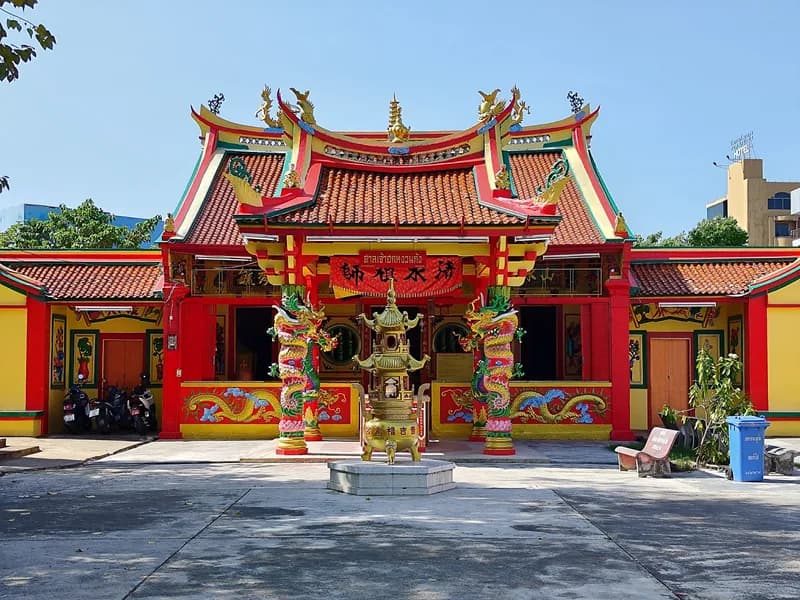
Hok Nguan Kong Shrine
Chinese shrineA Chinese shrine near the Surin circle in Phuket Town to Jor Su Kong, a black-faced deity who in life built bridges and roads and gave medicine away.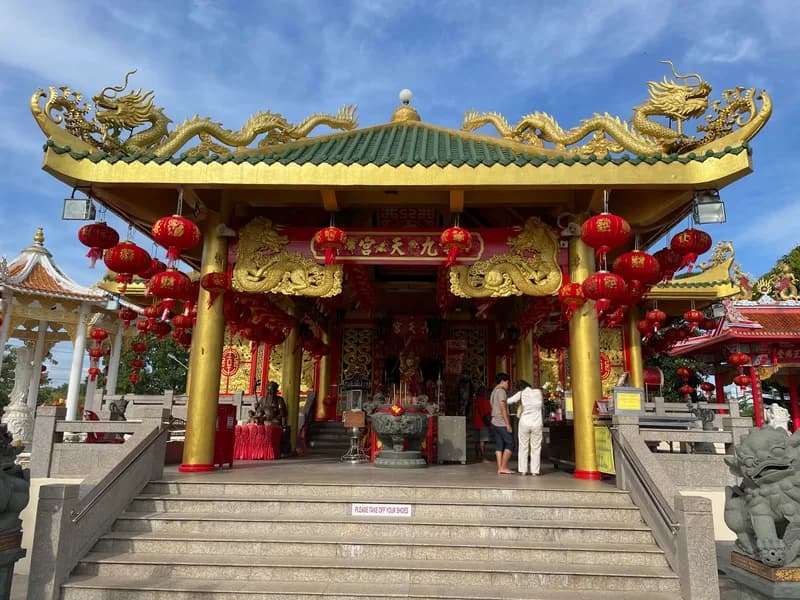
Kio Thian Keng Shrine (Saphan Hin)
Chinese shrine · Saphan HinA working shrine of the Chinese-Thai community on the Saphan Hin shore, where the Phuket Vegetarian Festival ends each year.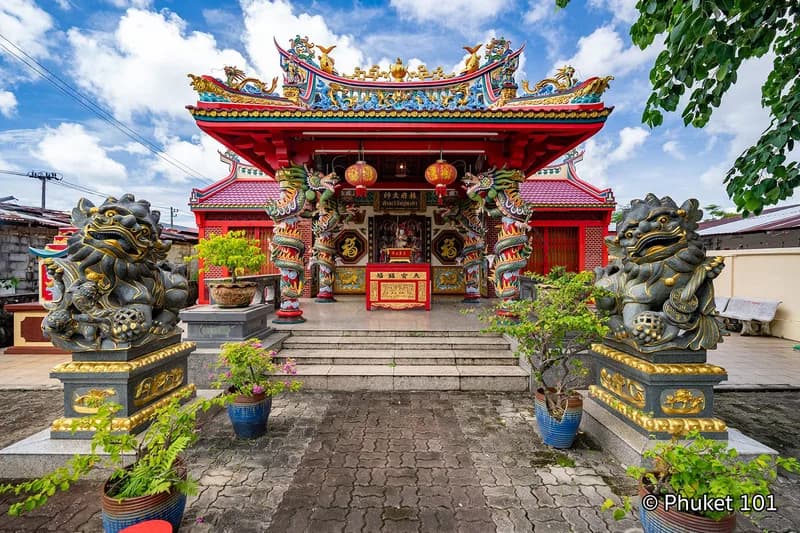
Long Hun Keng Shrine
Chinese shrineA small Chinese shrine (肜雲宮) on Thepkasattri Road in Phuket Town, with a part in the Vegetarian Festival.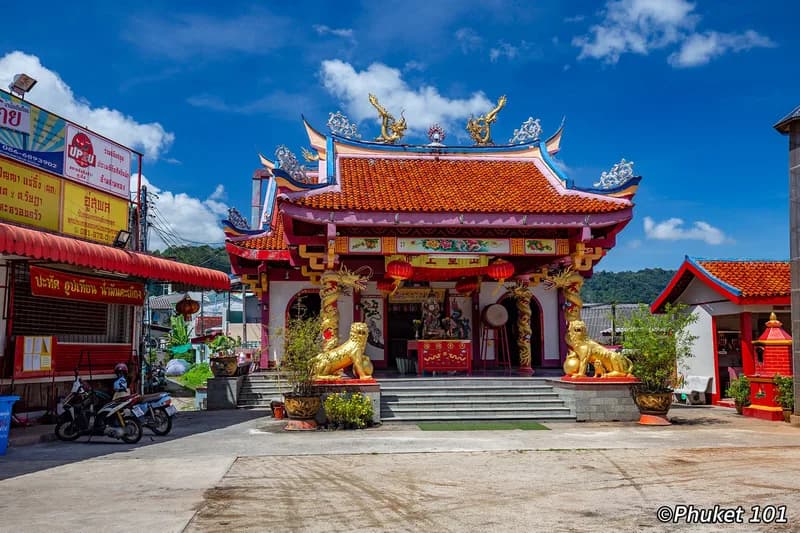
Sam Kong Shrine (Lim Hu Tai Su)
Chinese shrineA Chinese shrine built for the deity Lim Hu Tai Su on land a Chinese-Thai family gave, enlarged in the late 1940s and again in the mid-1990s.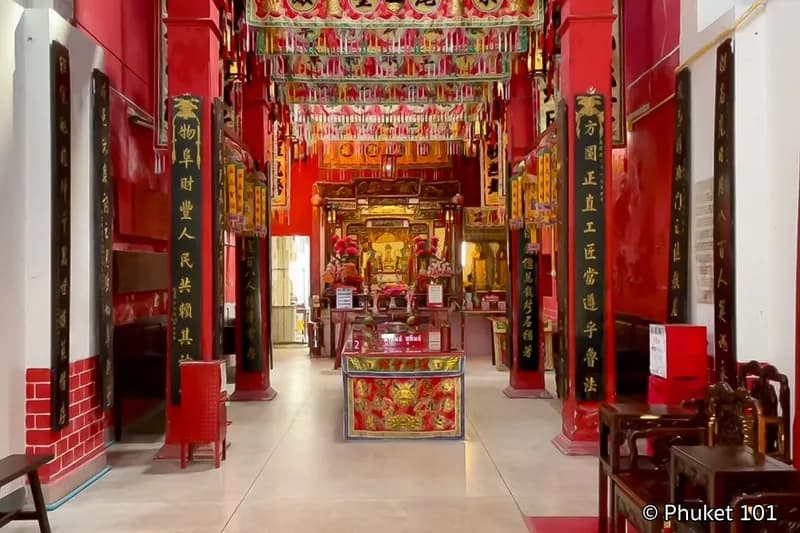
San Chao Hainan (Hainan Shrine)
Chinese shrine · Phuket Old TownA shrine of Phuket's Hainanese community on Thalang Road, built in 1910 as a shelter for new arrivals from China.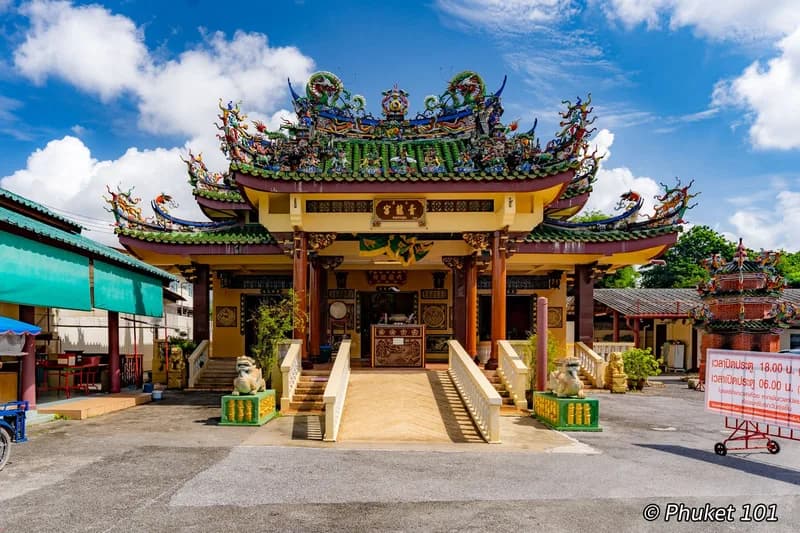
San Chao Jeng Ong
Chinese shrineA Chinese shrine down a small lane off Yaowarat Road, across from Vachira Phuket Hospital, where families of patients come to pray.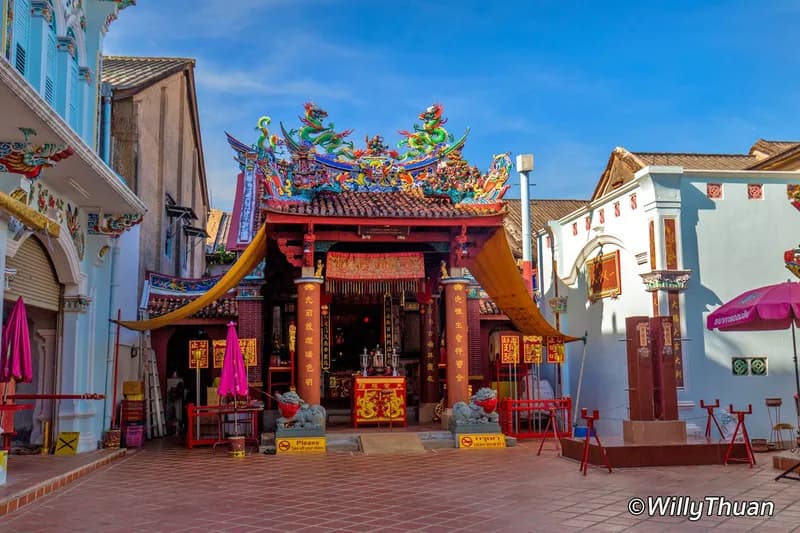
Shrine of the Serene Light
Chinese shrine · Phuket Old TownA small Chinese shrine built in 1891 by a Chinese family, hidden in a courtyard off Phang Nga Road in the Old Town.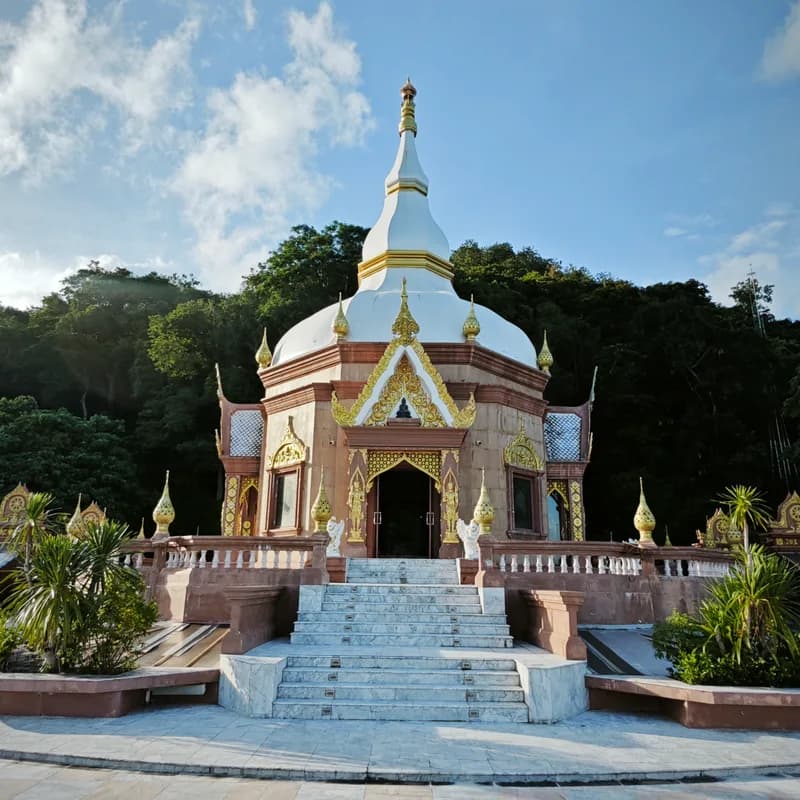
Wat Charoen Samanakit
Buddhist templeA modern temple on the edge of Phuket Town, built in 2012 on nine levels, each standing for a step on the path to enlightenment.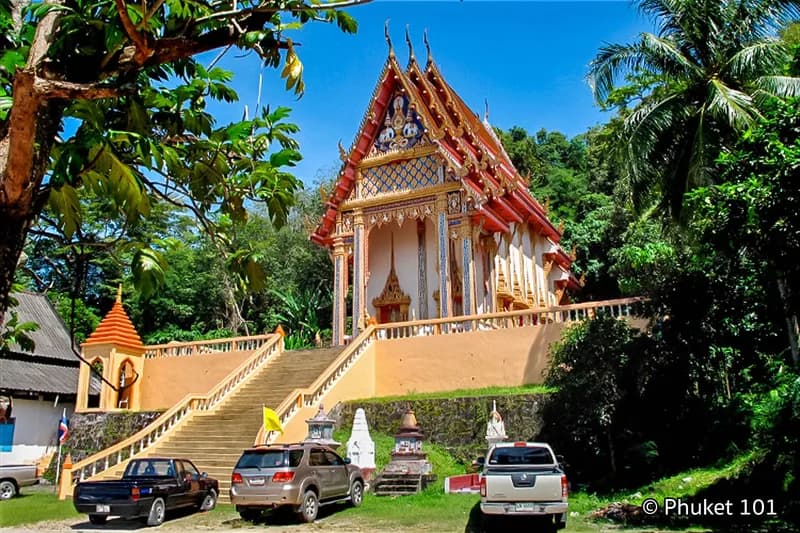
Wat Khosit Wiharn
Buddhist templeA Buddhist temple near Phuket Town on Thep Krasattri Road.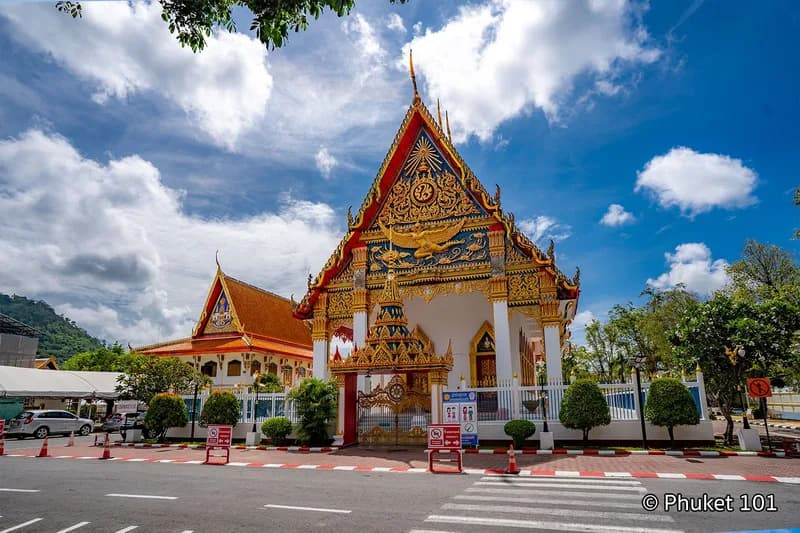
Wat Mongkol Nimit
Buddhist temple · Phuket Old TownA large working temple in the centre of Phuket Town that is also a school for monks.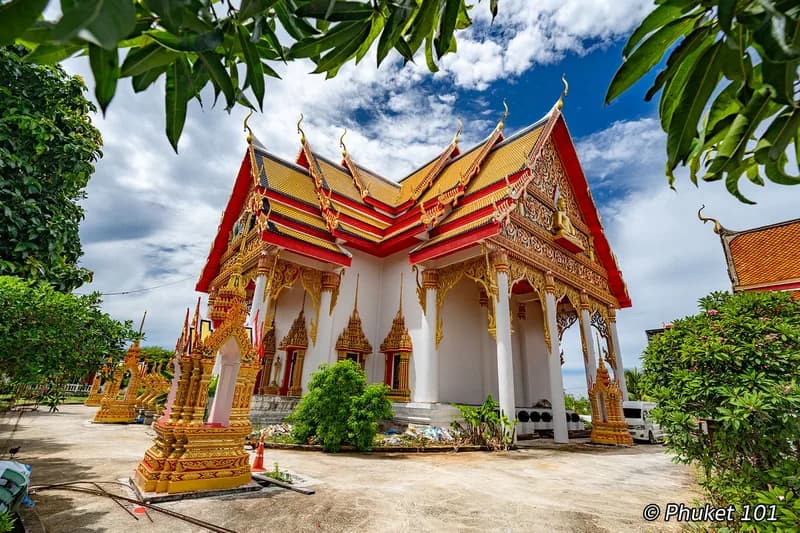
Wat Wichit Sangkharam
Buddhist templeA Phuket Town temple founded in 1918 and named after the provincial governor of the day, Phraya Wichit Songkhram; it climbs its slope in three levels.