The dry season
December to March: hot and dry, the best months for the loop in the cool of the morning and for the fairs and festivals on the lawns.
Area · Talat Yai
The reclaimed point at the south end of Phuket Road: a car-free loop by the sea, mangroves, a waterfront shrine, sports grounds and food carts every evening.
Saphan Hin is the seafront at the southern end of Phuket Town, where Phuket Road runs out into the bay. Its name means 'stone bridge': in the tin-mining days a causeway of piled stones ran down the beach here, and crews walked along it to the boats that took them out to the dredges moored offshore. The point was later built out on reclaimed land for parks and public grounds.
A white monument on the point honours the start of tin dredging in Phuket: it was put up on 28 December 1969 in memory of Captain Edward Miles, whose company brought the first tin dredge here in the early 1900s.
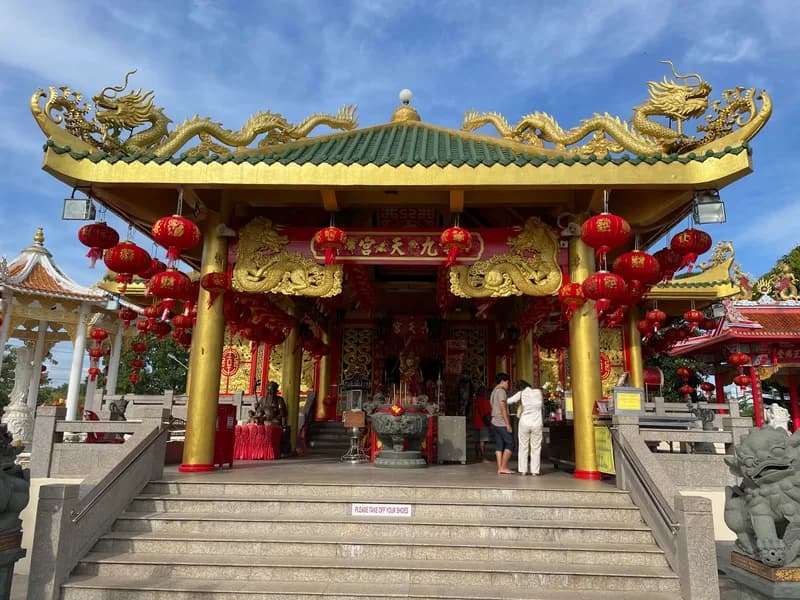
Today Saphan Hin is the town's park. A flat, car-free loop of about 3 km follows the sea, a raised boardwalk crosses a stand of mangroves, and lawns, sculptures left by the Thailand Biennale and a municipal sports complex with a public pool fill the rest. Kio Thian Keng, the waterfront Chinese shrine, is where the gods of every shrine are sent off on the last night of the Vegetarian Festival.
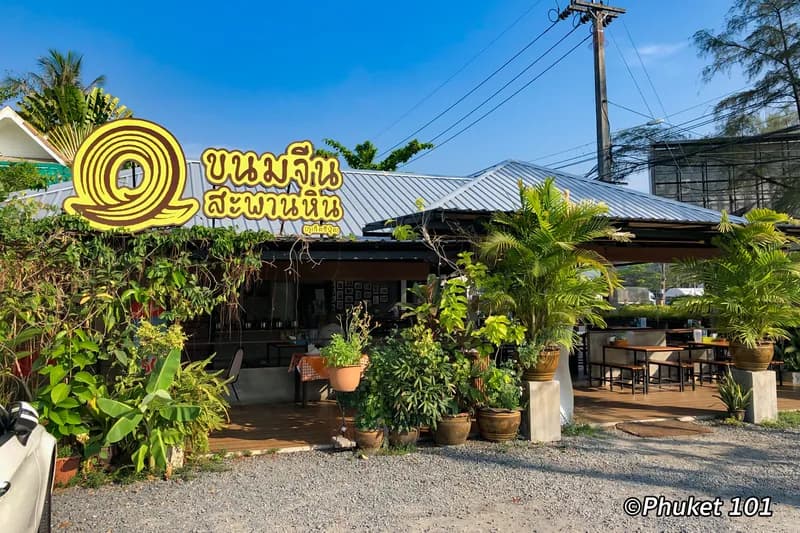
Mornings belong to runners and swimmers; from about 17:00 families spread mats on the grass, food carts line the seafront and, in season, fun fairs and stages go up. Phuket Town's best-known kanom jeen noodle house stands by the park, and some of the town's Michelin-listed street-food kitchens are less than a kilometre up Phuket Road.
A flat, paved, car-free loop of about 3 km along the water, busy with runners and cyclists early in the morning and with families after 17:00.
A raised boardwalk crosses a stand of mangrove forest, shaded and a few degrees cooler; wildlife shows on the mud at low tide.
Kanom Jeen Saphan Hin serves rice noodles with curry by the park, 09:00 to 19:00; after dark the carts along the seafront sell grilled chicken, som tam and fried noodles.
The municipal sports complex has fields and courts and a public outdoor pool where entry costs 20 to 50 THB; a swim cap is required.
The park looks east over the bay and its islands; at low tide the water draws far back over the mudflats.
There are car parks by the park and the sports complex; they fill on festival nights, above all on the Vegetarian Festival's last evening.
Sport
The 3 km car-free loop is the town's favourite running track; go before 08:00 or after 16:00, when it is cooler.
Nature
A shaded raised walkway through the mangroves at the park's edge; best at low tide, when wildlife shows on the mud.
Culture
The Chinese shrine on the waterfront, free and open daily; a tall statue carved in Beijing has stood here since 2011.
Culture · monsoon months
On the festival's final evening devotees from every shrine walk to Saphan Hin and the gods are sent off from Kio Thian Keng's shore; in 2026 the festival runs from 10 to 18 October.
Culture
A shrine and pavilion on the waterfront to Prince Chumphon, honoured as the father of the Royal Thai Navy.
Culture
Large works left from the Thailand Biennale stand on the lawns and the promenade; three are permanent.
Food and drink
Kanom Jeen Saphan Hin: choose a curry, collect a tray of vegetables, herbs and pickles and mix your own bowl of rice noodles; daily 09:00 to 19:00.
Food and drink
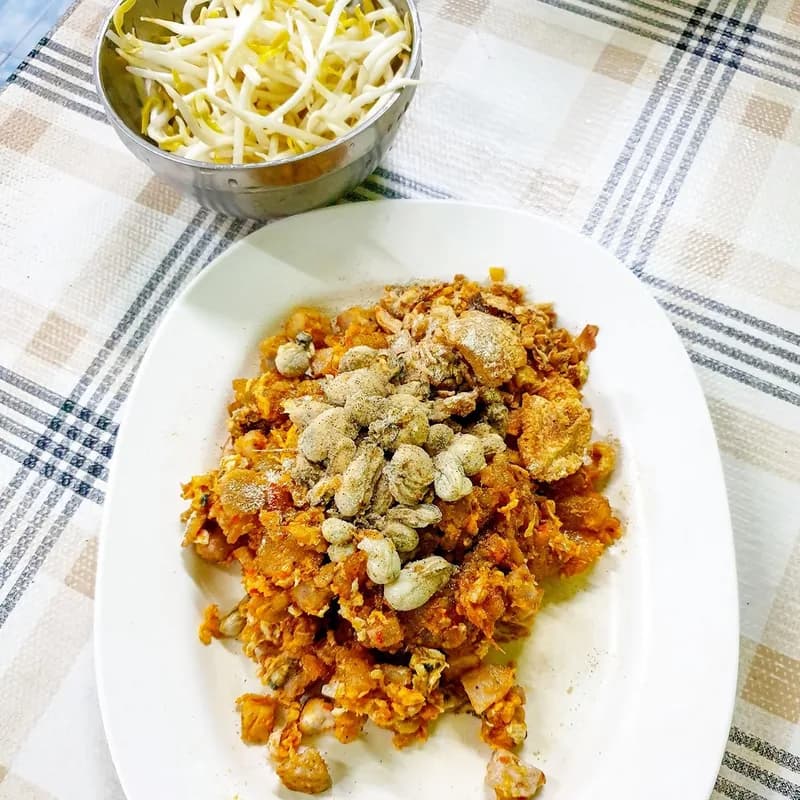
About 800 m up Phuket Road, O-Tao Bang Niao has fried Phuket's seafood-and-taro o-tao over charcoal since 1982; cheap, daily 16:00 to 23:00.
Food and drink
Phuket Town's best-known seafood dinner, about 1 km up Phuket Road: steamed crab, mantis shrimp with garlic; daily 17:00 to 23:30.
Food and drink
A plain family restaurant by Gorjan Bridge, about 500 m away, cooking each dish to order from family recipes; daily 17:00 to 22:30.
Sport
The sports complex's outdoor pool is used for morning laps and children's lessons; entry 20 to 50 THB, a swim cap required.
Family · dry season
In season the lawns host fun fairs with rides, stages and live bands, as well as the town's Loy Krathong and Songkran celebrations.
Run or walk the seafront loop before the heat, or swim laps at the public pool. Saphan Hin
Rice noodles with curry and a tray of fresh herbs at Kanom Jeen Saphan Hin. Kanom Jeen Saphan Hin
Kio Thian Keng and Prince Chumphon's shrine on the waterfront. Kio Thian Keng Shrine (Saphan Hin)
The raised boardwalk through the mangroves, cooler than the open lawns. Saphan Hin
Families spread mats, food carts arrive and the waterfront shrine lights up. Saphan Hin
O-tao at O-Tao Bang Niao or crab at Go Ang, both within about a kilometre. O Tao Bang Niao







Chinese shrine
Chinese shrine
Park
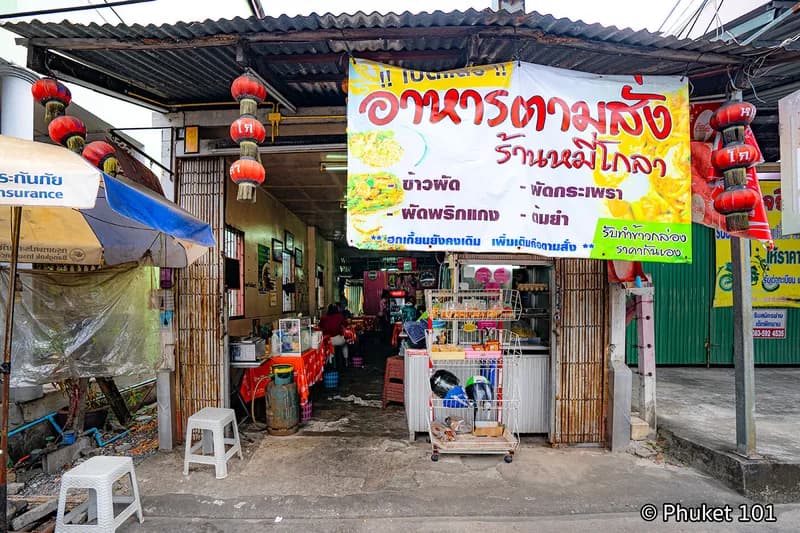
Local eatery
Restaurant
Local eatery
Seafood restaurant
Restaurant
Local eatery
Local eatery
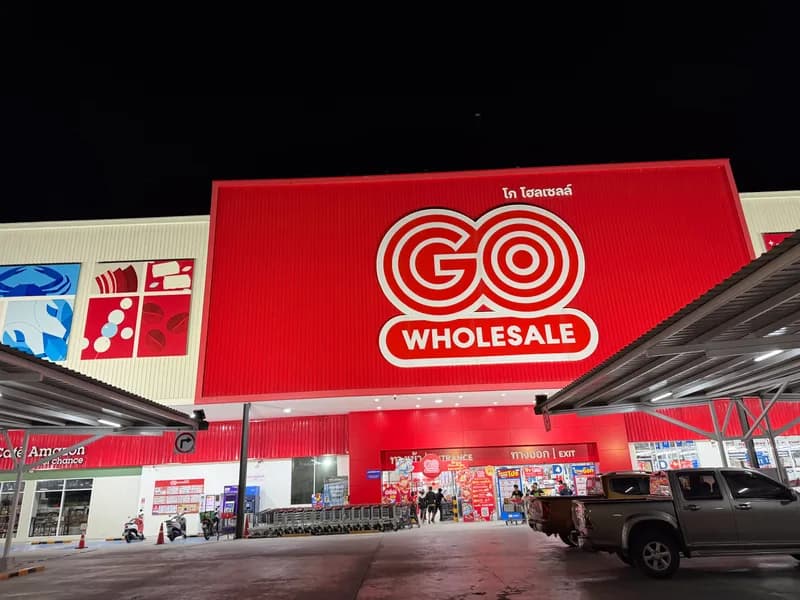
Wholesale store
Fresh market
Badminton courts
Swimming pool
Townhouses, shophouses and older condos on the streets behind the park, and new low-rise condos towards Wichit. Phuket Town rents are among the island's lowest: about 12,000 THB a month for a studio and 12,000 to 25,000 THB for a one-bedroom in 2026.
December to March: hot and dry, the best months for the loop in the cool of the morning and for the fairs and festivals on the lawns.
April to November: rain, often in short heavy showers. In October the Vegetarian Festival ends at Saphan Hin on its last evening (10 to 18 October in 2026).
The town's best open space for children: lawns to run on, a car-free loop for bikes and scooters, fun fairs in season and food carts every evening, plus a public pool with lessons. There is no swimming in the sea here.
Saphan Hin is at the south end of Phuket Road, about 2 km from the Old Town and about 30 to 45 minutes from the airport by car. Most people drive, ride or take a taxi; the park has car parks.
Parking. Car parks by the park and the sports complex; they fill on festival nights.
The loop is best before 08:00 or after 16:00; at midday there is little shade outside the mangroves.
The boardwalk is most interesting when the water is out and wildlife shows on the mud.
The public pool requires one; entry is cheap, 20 to 50 THB.
Pick a curry, then load up on the free vegetables, herbs and pickles at the tray table.
On the Vegetarian Festival's last evening the car parks fill and Phuket Road jams; come early on foot or by scooter.
The water is shallow mudflat at low tide and boats use the channel; swim in the pool instead.
'Stone bridge'. In the tin-mining days a causeway of piled stones ran down the beach here, and crews walked along it to the boats that carried them out to the dredges.
The Tin Mining Monument, put up on 28 December 1969 in memory of Captain Edward Miles, whose company brought the first tin dredge to Phuket in the early 1900s.
Not in the sea: it is a park on mudflats, not a beach. The municipal sports complex has a public outdoor pool, entry 20 to 50 THB.
About 3 km, flat, paved and car-free, along the seafront.
On its last evening, when the gods of every shrine are sent off from the Kio Thian Keng shore. In 2026 the festival runs from 10 to 18 October.
Kanom Jeen Saphan Hin by the park for rice noodles with curry, the evening food carts along the seafront, and Michelin-listed street food such as O-Tao Bang Niao and Go Ang Seafood within about a kilometre up Phuket Road.
Phuket Town has some of the island's lowest rents: in 2026 a studio was about 12,000 THB a month and a one-bedroom 12,000 to 25,000 THB.