The dry season
November to April: the sea is calm, warm and shallow at Nai Yang and clear at Nai Thon, the best months for swimming and snorkelling. Hotels fill up, but the beaches stay calmer than those in the south of the island.
District
A quiet subdistrict on Phuket's north-west coast: two beaches shaded by casuarinas inside Sirinat National Park, fishing villages, and the airport minutes away.
Sakhu is a subdistrict of Thalang on the north-west coast, between Mai Khao, where the airport is, and Choeng Thale to the south. Its two beaches, Nai Yang and Nai Thon, both lie inside Sirinat National Park, so the shore is lined with casuarina trees rather than buildings. Inland, low hills alternate with farmland and village streets.
The subdistrict has five villages: Nai Yang, Trok Muang, Sakhu, Nai Thon and Bang Ma Lao, the last split off from Nai Yang in 1999. Local history says the name comes from Sa Kho, a large pond where cattle came to drink.
Nai Yang is a wide, shallow bay just south of the runway, with a fishing village at its southern end and the national park's headquarters to the north. Nai Thon, about 7 km south of the airport, is a smaller bay of fine sand between rocky headlands, with one road of small restaurants and hotels behind it.
Life here is slower than on the southern beaches. There are no malls and no nightlife strip: people come for the shade, the seafood restaurants on the sand and the short drive to the airport. In the monsoon, Nai Yang becomes Phuket's main kitesurfing beach.
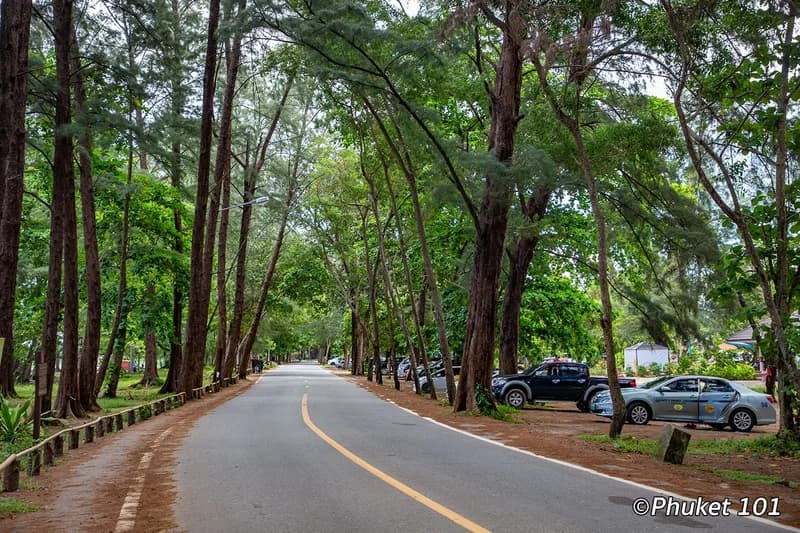
Nai Yang and Nai Thon belong to Sirinat National Park, which protects 22 km² of coast and 68 km² of sea. Casuarinas shade the sand, and a reef lies 700 to 1,000 m offshore.
Nai Yang is about 3 km from the terminal and Nai Thon about 7 km, so an early flight or a late arrival is an easy drive.
No high-rises, no jet skis at Nai Thon and no bar street: evenings mean dinner on the sand and an early night.
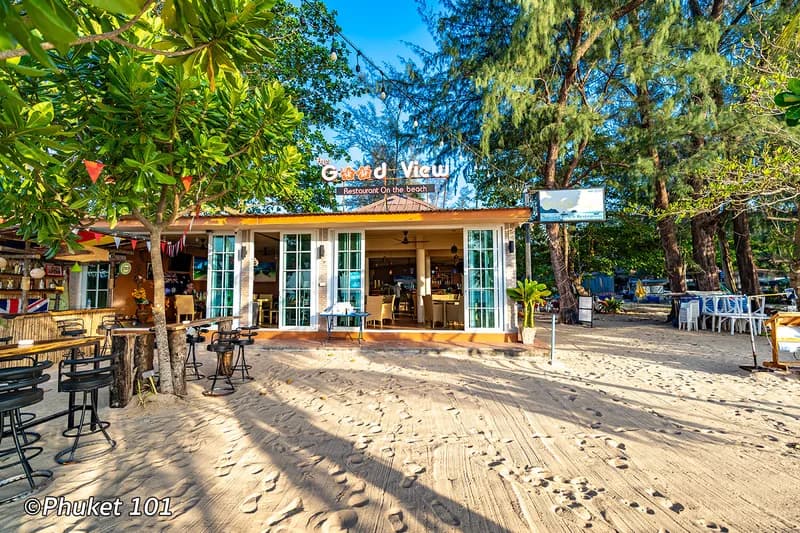
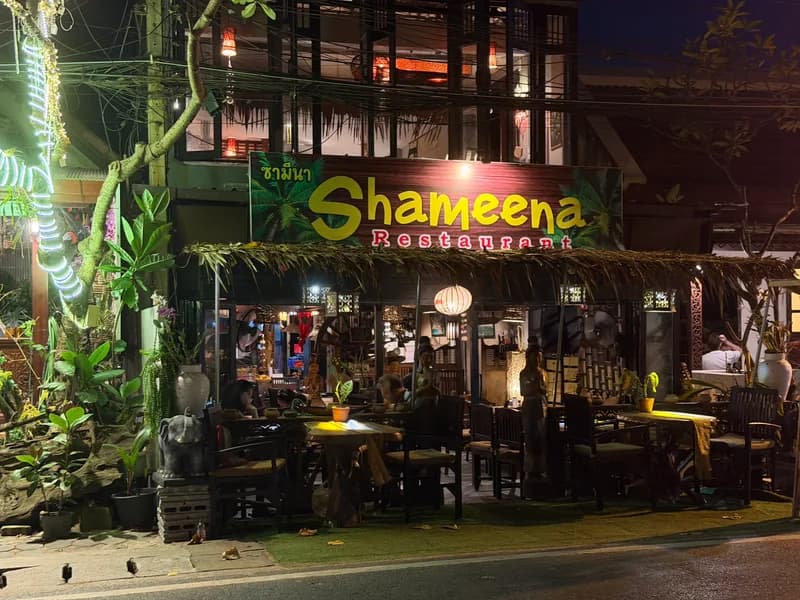
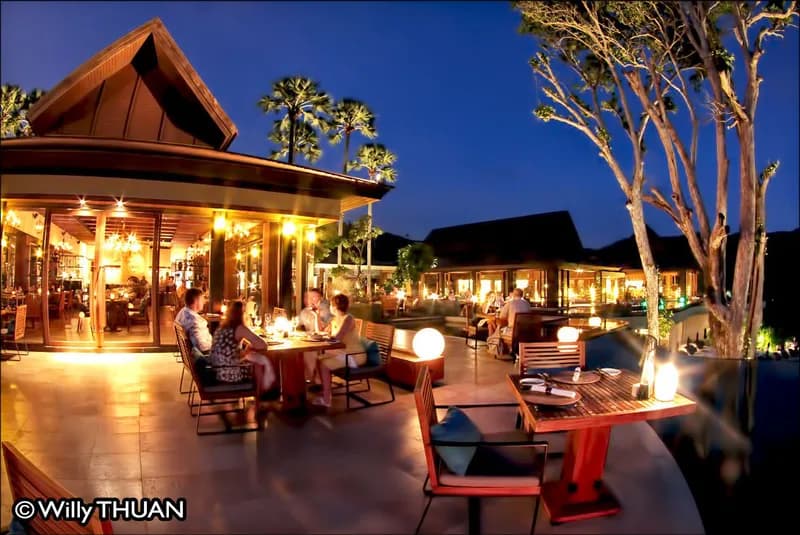
Restaurants along Nai Yang's beach road set their tables on the sand at sunset, from simple Thai seafood places to the resort restaurants at the south end of the bay.
From May to October the south-west wind makes Nai Yang Phuket's main kitesurfing beach, with a school working through the season. The wind is gusty: it suits riders with some experience.
In the dry season Nai Yang stays knee-deep far from the shore, and the trees give free shade along the whole beach.
Both bays face west, so the sun sets over open sea all year; at Nai Yang most people move to the sand for it.
On the sand · dry season
Spread a towel under the casuarinas, swim in the shallow bay and eat at a beach restaurant a few steps away. The village part of the beach is free.
Nature
The park's headquarters at the north end of Nai Yang has picnic spots under the trees, camping and park rooms. Foreigners pay 200 THB, children 100 THB (2026).
Nature · dry season
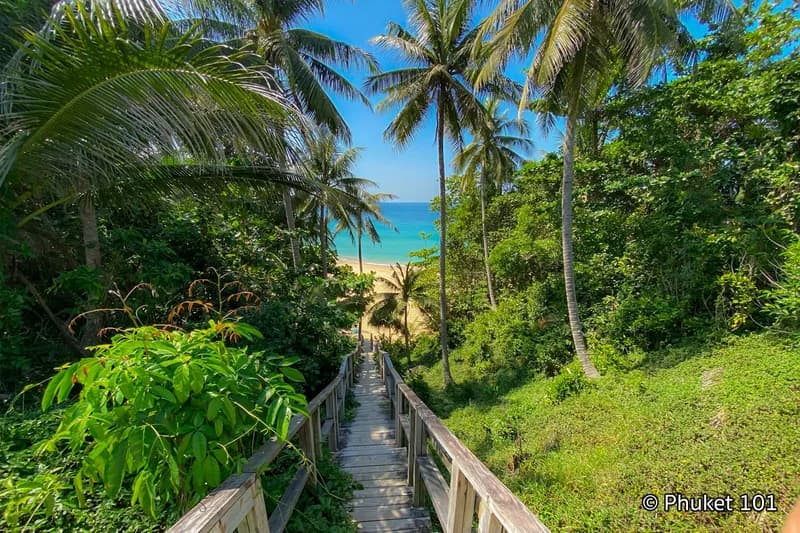
A weathered wooden staircase drops through the forest to the sea near Nai Thon. It is steep and uneven: go slowly.
Culture
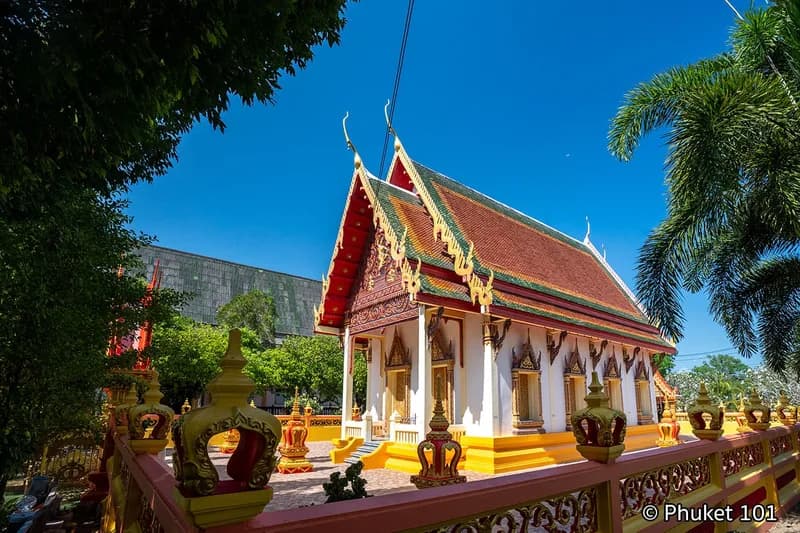
Nai Yang's village temple, also called Wat Nai Yang, with a white reclining Buddha and walls of mirrored tiles. Entry is free; cover shoulders and knees.
Food and drink
Opposite the temple on Tuesday, Thursday, Saturday and Sunday, from about 16:00 to 19:00: fruit, seafood, meat and cooked Thai food to take away.
Food and drink · dry season
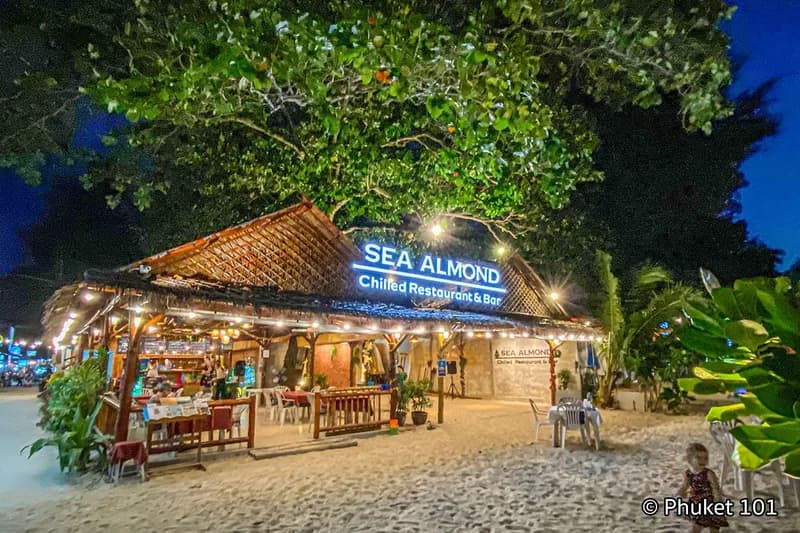
Restaurants on Nai Yang's beach road carry their tables onto the sand in the evening; book a front-row table in high season.
Water sports · monsoon months
From May to October Nai Yang's wind draws kitesurfers from around the island; lessons run through the season, best for riders who have tried it before.
Snorkelling and diving · dry season
The fish are around the rocky points at either end of Nai Thon; the middle of the bay is sand. Calm days from December to April are best.
Family
Planes pass low over the north end of Nai Yang on their way to the runway; the best-known plane-spotting beach is just north, at Mai Khao.
On the sand · dry season
Tall trees shade the whole beach and vendors keep their distance; many people simply hang a hammock between the trees.
Food and drink
Vero Trattoria, at the resort on the hillside above the south end of Nai Thon, serves Italian food and wine away from the beach road.
Walk Nai Yang's shore while it is cool, as the fishing boats come in at the village end.
Swim at Nai Thon while the sea is calmest, or snorkel the rocks at either end of the bay.
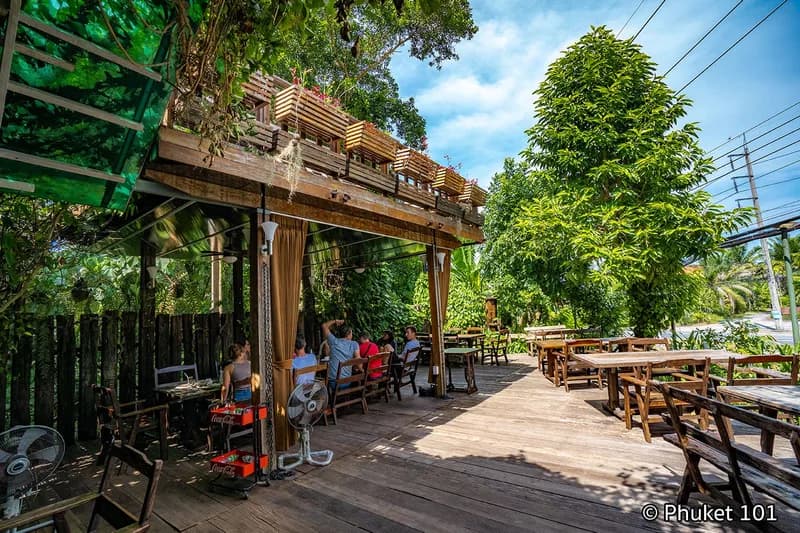
Lunch in the shade at one of Nai Yang's beach restaurants. The Good View
A look inside Wat Mongkhon Wararam; on market days the stalls open opposite at about 16:00. Wat Mongkhon Wararam (Wat Nai Yang)
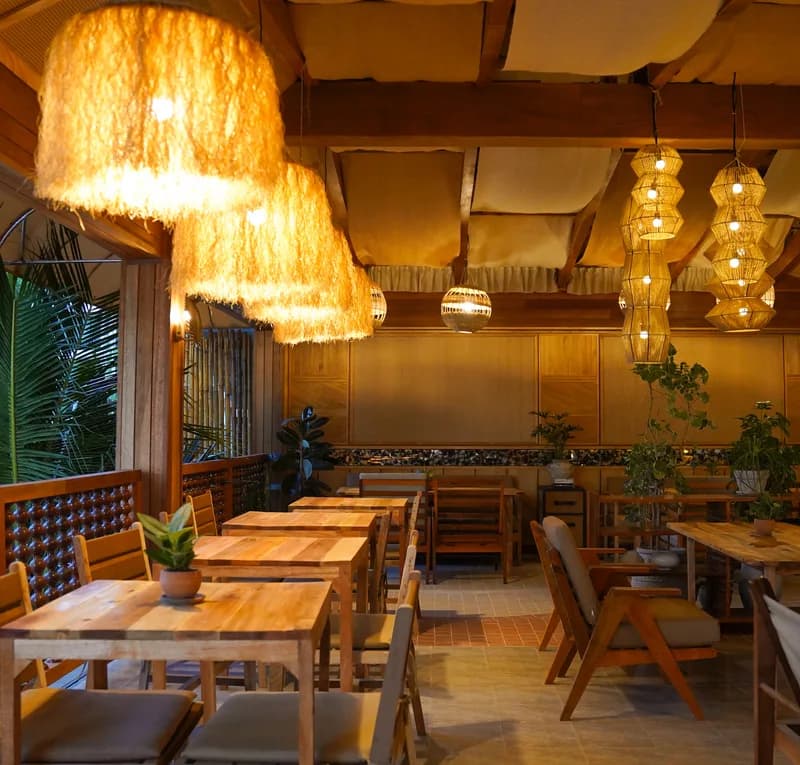
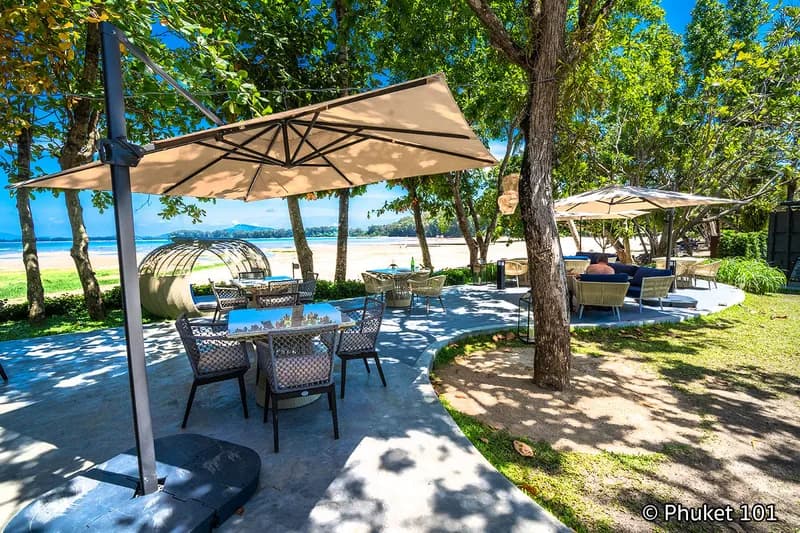
Both bays face west: take a table on the sand or a spot under the trees. Sea Almond Chilled Restaurant & Cafe
Grilled seafood at a beach restaurant, then home: Sakhu is quiet after dark.



Buddhist temple
Viewpoint
Nature reserve
Restaurant
Restaurant
Restaurant
Restaurant
Restaurant
Restaurant
Restaurant
Restaurant
Restaurant
Restaurant
Restaurant
Restaurant
Restaurant
Restaurant
Fresh market
Yoga studio
Homes are low-rise: condos and pool villas around Nai Yang and on the hills above Nai Thon, resorts near the beaches and village houses inland. The national park keeps building off the sand; aircraft noise depends on the exact spot and the wind.
30 homes for rent in SakhuNovember to April: the sea is calm, warm and shallow at Nai Yang and clear at Nai Thon, the best months for swimming and snorkelling. Hotels fill up, but the beaches stay calmer than those in the south of the island.
May to October: the south-west monsoon brings wind, waves and red flags, and swimming is often unsafe. Kitesurfers arrive at Nai Yang, some small restaurants close, and the tide leaves debris on the sand.
Sakhu suits families with small children in the dry season: Nai Yang's water stays shallow far out, trees give shade and food is steps from the sand. For daily life, malls, hospitals and most international schools are a drive away.
Sakhu is the nearest coast to the airport: Nai Yang is about 3 km from the terminal and Nai Thon about 7 km. The orange airport bus to Phuket Town stops at Nai Yang; the Smart Bus does not, so most people use a car, a scooter or a ride app.
Parking. Easy at Nai Thon, under the trees along the beach road. Tight at Nai Yang, where the road is narrow and does not go through: park at the first restaurants.
Nai Yang's beach road is narrow and does not go through; leave the car near the first restaurants rather than at the end.
The national-park end of Nai Yang charges foreigners 200 THB and children 100 THB (2026); the village part of the beach is free.
For an early flight or a late arrival, a night here saves the long drive to the southern beaches.
From May to October the sea is often rough; at Nai Thon lifeguards mark the safe zone with flags by day.
Nai Yang's fresh market opens at about 16:00 on Tuesday, Thursday, Saturday and Sunday; the cooked food goes first.
The wooden steps near Nai Thon are weathered and steep; if in doubt, take your photos from the bottom.
Nai Yang's wind blows from May to October and is gusty; complete beginners do better at Rawai from November to April.
The large private hospitals are in Phuket Town, 40 to 50 minutes away; save the route before you need it.
From May some small restaurants and shops close for weeks; check before you drive.
On the north-west coast in Thalang district, next to the airport. It takes in Nai Yang and Nai Thon beaches and borders Mai Khao to the north, Choeng Thale to the south and Thep Krasatti inland.
Yes. Nai Yang is one of Sakhu's five villages and the beach most people mean when they name the area; Nai Thon, further south, is the subdistrict's other beach.
About 3 km, 5 to 15 minutes by car. Nai Thon is about 7 km south of the airport, 10 to 20 minutes away.
The village part of the beach is free. The national-park section at the north end charges foreigners 200 THB and children 100 THB (2026).
Planes pass low over the north end of the bay on their way to the runway. In the village most people find the noise mild, but it depends on the exact spot and the wind, so listen before you rent.
From May to October, when the south-west monsoon blows. The wind is gusty and suits riders with some experience; beginners usually learn at Rawai from November to April.
The best months are November to April. From May to October the sea is often rough and red flags go up; Nai Thon has lifeguards and flagged zones by day.
Yes, a fresh market opposite Wat Mongkhon Wararam on Tuesday, Thursday, Saturday and Sunday, from about 16:00 to 19:00 (2026), with fruit, seafood and cooked food.
For a quiet life near the airport, yes: low-rise homes, two national-park beaches and a village pace. The trade-off is distance: big malls, hospitals and most international schools are a drive away.